
The rapid evolution of artificial intelligence (AI) technologies has transformed various sectors, including finance and enterprise IT. In particular, the integration of AI into trading operations has become increasingly prevalent, as firms seek to enhance efficiency and decision-making capabilities. This article examines the case of Jefferies, a global investment bank, which successfully optimized its front office trading operations through an innovative AI solution built on Strands Agents. By understanding the mechanisms behind this implementation, marketers and practitioners in the enterprise IT space can glean valuable insights applicable to their own operations.
Understanding AI in Trading Operations
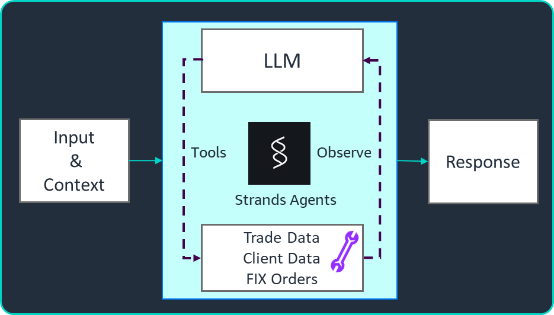
AI refers to the simulation of human intelligence in machines programmed to think and learn like humans. In the context of trading, AI can analyze vast amounts of data, identify patterns, and make predictions, thereby aiding traders in making informed decisions. Jefferies’ approach involved utilizing large language models (LLMs) and Amazon Bedrock, a service that allows developers to build and scale AI applications. The integration of these technologies enabled Jefferies to create a trade assistant capable of reasoning, planning, and executing trades more efficiently.
Recent Changes in AI Implementation
Jefferies’ adoption of AI represents a significant shift in how financial institutions leverage technology. The use of Strands Agents, an SDK designed for building AI agents, allows for orchestrating calls to foundation models (FMs) and external tools. This approach not only enhances the capabilities of AI agents but also ensures secure connections to diverse data sources through the Model Context Protocol (MCP). This open standard facilitates seamless integration, enabling AI agents to access and utilize information from various platforms effectively.
Implications for Enterprise IT Marketing
The implications of Jefferies’ AI implementation extend beyond the financial sector. For enterprise IT marketers, understanding how AI can optimize operations is crucial. The ability to harness AI technologies can lead to improved operational efficiency, reduced costs, and enhanced decision-making processes. Marketers should focus on educating clients about the potential benefits of AI, emphasizing its role in driving innovation and competitive advantage.
A Practical Framework for AI Integration
To effectively integrate AI into enterprise IT operations, marketers and practitioners can follow a practical framework:
- Identify Objectives: Clearly define the goals you aim to achieve with AI integration, such as improving efficiency or enhancing customer experience.
- Assess Data Sources: Evaluate the data available within your organization and identify external data sources that can enrich your AI models.
- Choose the Right Tools: Select appropriate AI tools and platforms, such as Amazon Bedrock, that align with your objectives and data sources.
- Implement Security Protocols: Ensure that data security measures, like the Model Context Protocol, are in place to protect sensitive information.
- Monitor and Optimize: Continuously assess the performance of your AI systems and make necessary adjustments to improve outcomes.
Implications for the APAC and Hong Kong Markets
In the APAC region, including Hong Kong, the adoption of AI in enterprise IT is gaining momentum. Financial institutions and other enterprises are increasingly recognizing the need to innovate and stay competitive in a rapidly changing landscape. The case of Jefferies serves as a compelling example for local firms looking to enhance their operations through AI. Marketers in this region should focus on building awareness around AI capabilities, fostering partnerships with technology providers, and showcasing successful implementations to drive interest and investment in AI solutions.
Conclusion
This article has provided an overview of how Jefferies optimized its trading operations using AI technologies, particularly through the Strands Agents SDK and Amazon Bedrock. As enterprise IT marketers in the APAC region consider the implications of these advancements, it is essential to focus on educating clients about the transformative potential of AI. By leveraging the insights gained from Jefferies’ experience, marketers can better position their offerings and drive adoption of AI solutions within their organizations. This is a curated educational briefing with further details available at https://aws.amazon.com/blogs/machine-learning/building-trade-assistant-how-jefferies-optimized-front-office-trading-operations-with-ai/.