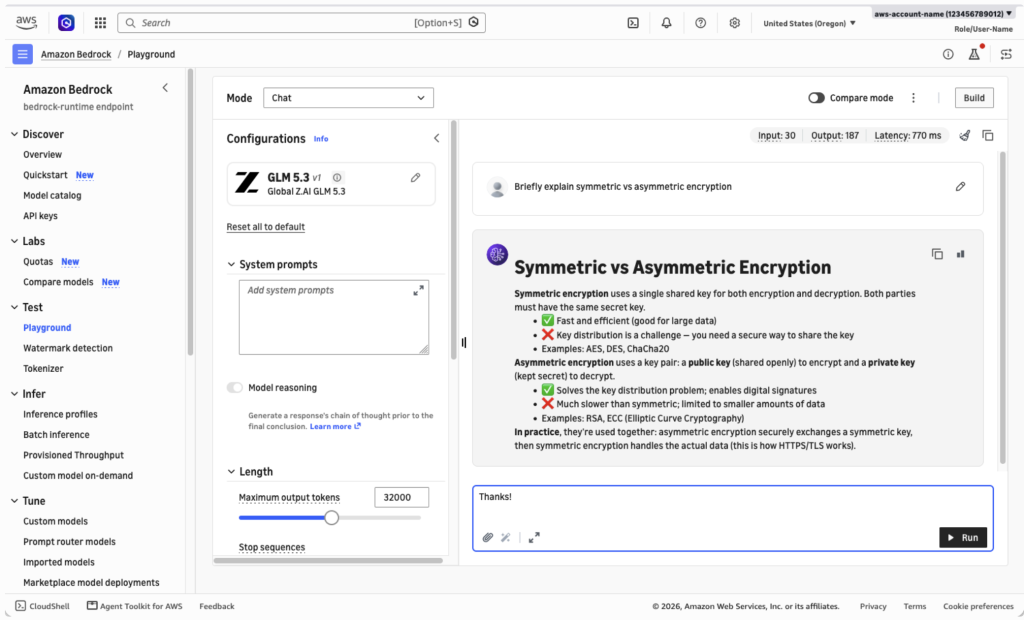


In the rapidly evolving landscape of artificial intelligence (AI), the introduction of new models and features can significantly impact how businesses leverage these technologies. One such development is the availability of OpenAI’s GPT-5.6 models—Sol, Terra, and Luna—on Amazon Bedrock. These models come with a noteworthy feature: explicit prompt caching. This article aims to elucidate the concept of prompt caching, discuss the changes introduced with GPT-5.6, and explore the implications for enterprise IT marketing, particularly in the Asia-Pacific (APAC) region, including Hong Kong.
Understanding Prompt Caching
Prompt caching refers to the mechanism of storing specific parts of a prompt that have been previously used in a model’s inference process. This allows for the reuse of these segments in future requests, thereby reducing the computational load and improving response times. In the context of AI models like GPT-5.6, effective prompt caching can lead to more efficient interactions and lower operational costs, making it a valuable tool for businesses.
What Changed with GPT-5.6?
The recent introduction of explicit prompt caching in GPT-5.6 models on Amazon Bedrock marks a significant advancement. Unlike previous iterations, where caching was more implicit and less controllable, explicit prompt caching allows users to determine precisely which parts of their prompts are cached and reused. This level of control can lead to optimized performance and cost savings, as businesses can tailor their interactions based on specific needs.
Why It Matters for Enterprise IT Marketing
For enterprise IT marketers, the ability to utilize explicit prompt caching can enhance customer engagement strategies. By leveraging this feature, businesses can create more personalized and contextually relevant interactions with their clients. This is particularly important in a B2B environment where decision-makers expect tailored solutions that address their unique challenges.
Moreover, the cost efficiency gained from reduced inference costs can free up budgetary resources for other marketing initiatives. As AI becomes increasingly integral to marketing strategies, understanding and implementing features like explicit prompt caching will be crucial for maintaining a competitive edge.
Practical Framework for Implementation
To effectively implement explicit prompt caching in your marketing strategies, consider the following checklist:
- Assess Current Workloads: Evaluate existing GPT workloads to identify areas where caching can be beneficial.
- Define Caching Strategy: Determine which parts of your prompts are most frequently used and would benefit from caching.
- Set Up Explicit Caching: Utilize Amazon Bedrock’s tools to configure your caching settings according to your defined strategy.
- Monitor Performance: Continuously track the performance of your AI interactions to ensure that caching is yielding the desired results.
- Iterate and Optimize: Be prepared to adjust your caching strategy based on performance metrics and changing business needs.
Implications for APAC and Hong Kong
The APAC region, and Hong Kong in particular, is witnessing a surge in AI adoption across various sectors. As businesses strive to enhance their digital transformation efforts, the ability to implement explicit prompt caching can provide a significant advantage. Companies in Hong Kong can leverage this technology to improve customer interactions, optimize marketing campaigns, and reduce operational costs.
Furthermore, as the regulatory landscape in APAC evolves, understanding the implications of AI technologies will be essential for compliance and ethical marketing practices. Marketers must stay informed about local regulations regarding data usage and AI applications to ensure responsible implementation.
Conclusion
In summary, the introduction of explicit prompt caching for OpenAI GPT-5.6 models on Amazon Bedrock presents a transformative opportunity for enterprise IT marketers. By understanding and implementing this feature, businesses can enhance their marketing strategies, improve customer engagement, and achieve cost efficiencies. This article serves as a curated educational briefing for marketers aiming to stay ahead in the competitive landscape of AI-driven marketing. For further details, please refer to the source: AWS Machine Learning Blog.