
In the rapidly evolving landscape of artificial intelligence (AI), the security and governance of AI agents have become paramount, especially for enterprise IT brands. One of the latest advancements in this domain is the introduction of temporal policies in Amazon Bedrock AgentCore. These policies allow organizations to define stateful rules that evaluate authorization based on an agent’s session history. This article will delve into the concept of temporal policies, discuss recent changes in the AI landscape, and explore their implications for enterprise IT marketing.
Defining Temporal Policies
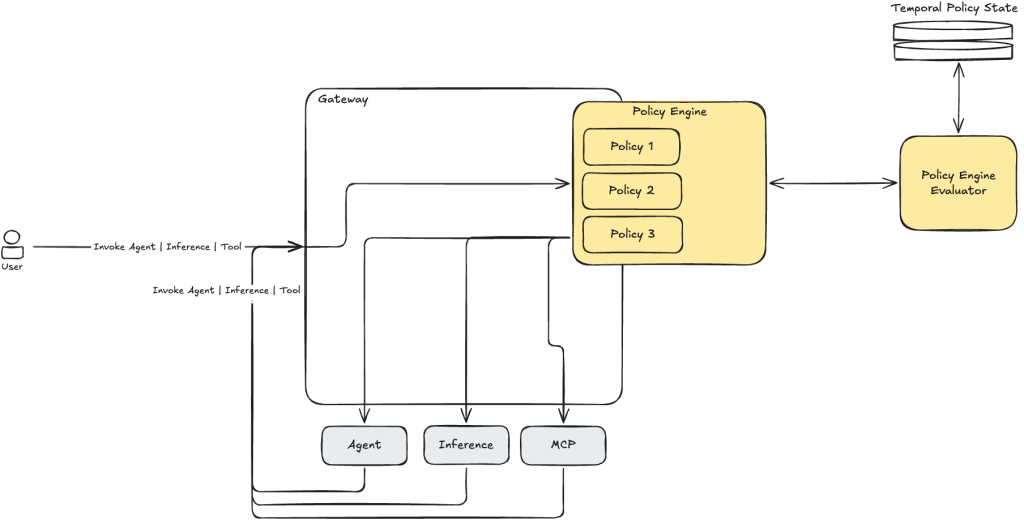
Temporal policies are a set of rules that govern the behavior of AI agents over time, taking into account their past interactions and decisions. Unlike static policies, which are fixed and do not adapt to the context or history of an agent’s actions, temporal policies allow for a more dynamic approach to security and authorization. These policies can enforce workflow sequencing, prevent data fabrication, limit financial exposure, and necessitate human approval for high-stakes actions.
Recent Changes in AI Governance
The introduction of temporal policies marks a significant shift in how organizations manage AI agents. Traditionally, AI governance has focused on static compliance measures that do not account for the evolving nature of AI interactions. With the advent of technologies like Amazon Bedrock AgentCore, organizations can now implement more nuanced security measures that respond to the behavior of AI agents in real-time. This shift is crucial as AI agents become increasingly autonomous and capable of making decisions that can have substantial implications for businesses.
Why This Matters for Enterprise IT Marketing
For enterprise IT marketers, understanding the implications of temporal policies is essential. As organizations adopt AI technologies, they will seek solutions that not only enhance operational efficiency but also ensure security and compliance. Marketers must position their offerings in a way that highlights the importance of secure AI governance, particularly in industries where data integrity and financial risk are critical concerns.
Practical Framework for Implementing Temporal Policies
To effectively implement temporal policies, enterprise IT marketers should consider the following framework:
- Assessment of Current Policies: Evaluate existing security policies and identify gaps that temporal policies can address.
- Integration with AI Workflows: Ensure that temporal policies are seamlessly integrated into AI workflows to monitor and evaluate agent behavior continuously.
- Training and Awareness: Provide training for stakeholders on the importance of temporal policies and how they can enhance security and compliance.
- Monitoring and Evaluation: Establish metrics to monitor the effectiveness of temporal policies and make adjustments as necessary.
- Feedback Mechanism: Create a feedback loop to learn from the implementation process and refine policies over time.
Implications for APAC and Hong Kong
In the Asia-Pacific (APAC) region, including Hong Kong, the adoption of AI technologies is accelerating across various sectors, including finance, healthcare, and logistics. As businesses in these sectors increasingly rely on AI agents, the implementation of temporal policies will be crucial in addressing regulatory compliance and security concerns. Marketers in Hong Kong must emphasize the role of temporal policies in safeguarding sensitive data and ensuring ethical AI practices. Furthermore, as regulatory frameworks evolve, organizations will need to adapt their marketing strategies to highlight compliance and security as key differentiators.
Conclusion
In conclusion, the introduction of temporal policies in AI governance represents a significant advancement in securing AI agents. For enterprise IT marketers, understanding and communicating the benefits of these policies will be essential in positioning their solutions effectively. By adopting a practical framework for implementation and considering the unique implications for the APAC region, marketers can better serve their clients in navigating the complexities of AI governance. This is a curated educational briefing with further insights available at https://aws.amazon.com/blogs/machine-learning/securing-ai-agents-with-temporal-policies-in-amazon-bedrock-agentcore/.