
In the rapidly evolving landscape of enterprise IT, the integration of artificial intelligence (AI) agents has become a cornerstone for enhancing operational efficiency and decision-making. AI agents, powered by machine learning algorithms, are designed to perform specific tasks autonomously, thereby reducing the burden on human resources. However, the effectiveness of these agents hinges on their evaluation mechanisms. This article delves into the recent advancements in AI agent evaluation, particularly through the collaboration between Motorway and AWS, which has resulted in a robust evaluation pipeline that significantly improves the accuracy and efficiency of AI agents.
Understanding AI Agents and Their Evaluation
AI agents are software entities that utilize machine learning to execute tasks, learn from data, and adapt to new situations. The evaluation of these agents is crucial as it determines their reliability and effectiveness in real-world applications. Traditionally, evaluating AI agents involved extensive manual processes that could take hours, leading to delays in issue detection and resolution. However, with the introduction of structured evaluation pipelines, organizations can streamline this process, ensuring quicker and more accurate assessments.
Recent Changes in AI Agent Evaluation
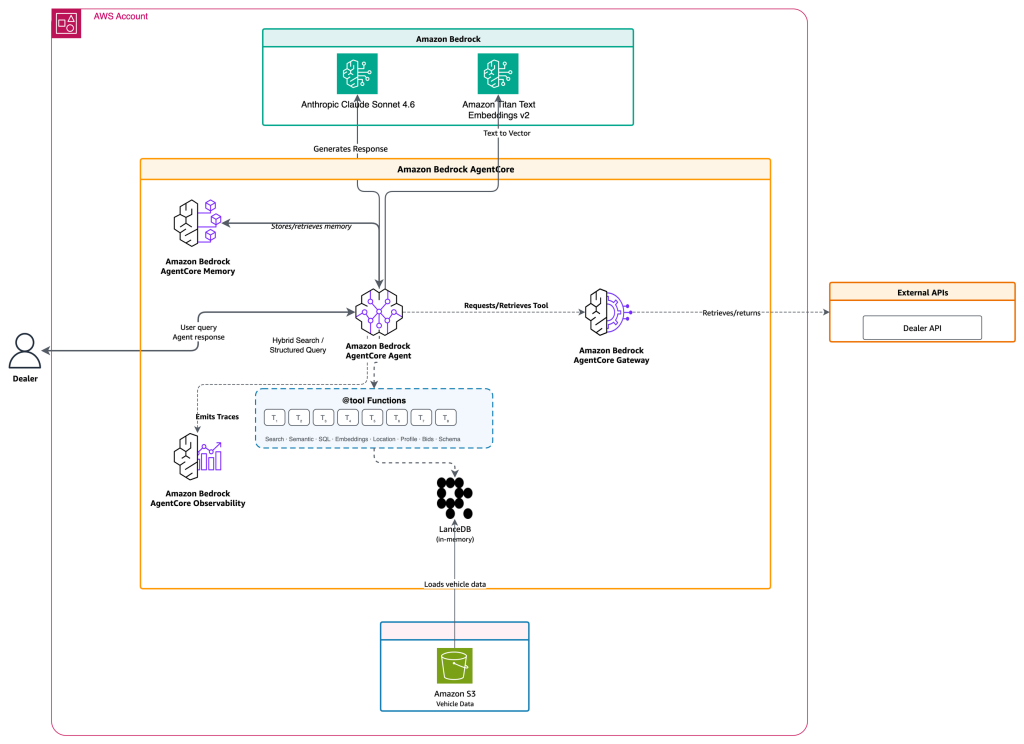
According to the AWS Machine Learning Blog, the partnership between Motorway and AWS has led to the development of an end-to-end evaluation pipeline that has drastically improved the performance metrics of AI agents. This pipeline integrates the Strands Agents SDK with Amazon Bedrock AgentCore, a fully managed service that facilitates the deployment and operation of AI agents at scale. The results are impressive: the rate of incorrect results has been reduced from 1 in 8 queries to 1 in 50, and the time taken to detect issues has been cut down from several hours to mere minutes.
Why This Matters for Enterprise IT Marketing
The implications of these advancements for enterprise IT marketing are profound. As organizations increasingly rely on AI agents to enhance customer interactions and streamline operations, the need for effective evaluation mechanisms becomes paramount. Marketers must understand that the reliability of AI agents directly influences customer satisfaction and brand reputation. By adopting robust evaluation pipelines, businesses can ensure that their AI solutions deliver consistent and accurate results, fostering trust among their clientele.
A Practical Framework for Implementing Evaluation Pipelines
To implement an effective evaluation pipeline for AI agents, marketers and practitioners should consider the following framework:
- Define Objectives: Clearly outline what you aim to achieve with your AI agents, such as improving customer service response times or enhancing data analysis accuracy.
- Integrate Evaluation Tools: Utilize tools like the Strands Agents SDK and Amazon Bedrock AgentCore to facilitate the deployment and evaluation of your AI agents.
- Establish Metrics: Determine key performance indicators (KPIs) such as accuracy rates, response times, and user satisfaction levels to assess the effectiveness of your AI agents.
- Continuous Monitoring: Implement a system for ongoing evaluation and monitoring to quickly identify and rectify any issues that arise during operation.
- Feedback Loop: Create a feedback mechanism that allows for continuous improvement of AI agents based on performance data and user feedback.
Implications for APAC and Hong Kong IT Marketers
In the context of the APAC region, and specifically Hong Kong, the adoption of AI technologies is accelerating. As businesses in this region increasingly invest in digital transformation, the implementation of effective evaluation pipelines for AI agents will be critical. Marketers must not only promote the benefits of AI solutions but also assure potential clients of their reliability through demonstrated evaluation success. This is particularly important in a market that values efficiency and accuracy, making the ability to showcase improved performance metrics a competitive advantage.
Conclusion
This article has highlighted the importance of building an effective evaluation pipeline for AI agents, drawing insights from the collaboration between Motorway and AWS. By understanding the mechanisms behind AI agent evaluation and implementing a structured approach, enterprise IT marketers can enhance their offerings and build stronger relationships with their clients. This is a curated educational briefing with further details available at https://aws.amazon.com/blogs/machine-learning/evaluating-ai-agents-a-production-blueprint-with-strands-and-agentcore/.