
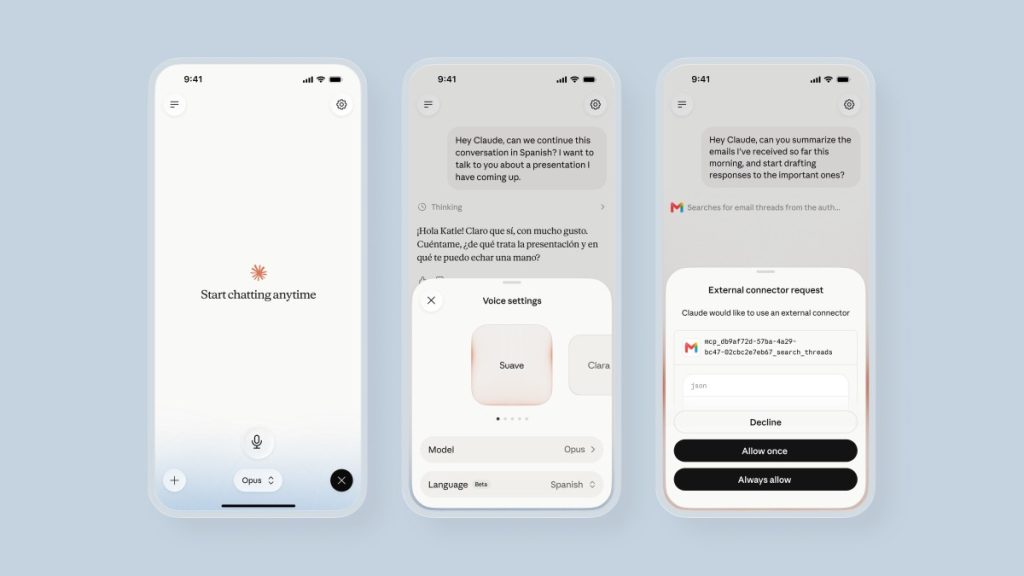
The landscape of artificial intelligence (AI) is rapidly evolving, particularly in the realm of voice technology. Recently, TechCrunch reported on Anthropic’s updates to its Claude voice model, which now boasts enhanced capabilities for tasks such as rescheduling meetings and drafting emails. This article aims to unpack these advancements, define key terms, and discuss their implications for enterprise IT marketing, particularly in the Asia-Pacific (APAC) region, including Hong Kong.
Understanding Voice AI and Its Evolution
Voice AI refers to technology that enables machines to understand and respond to spoken language. This includes natural language processing (NLP) and speech recognition, which allow systems to interpret user commands and generate spoken responses. The evolution of voice AI has been marked by significant advancements in machine learning algorithms, enabling more nuanced understanding and interaction.
Anthropic’s Claude is a prime example of this evolution. The latest iteration of Claude’s voice model incorporates more sophisticated machine learning techniques, allowing it to perform complex tasks that were previously challenging for AI systems. This includes not only basic commands but also contextual understanding, which is essential for tasks like rescheduling meetings or drafting emails.
What Changed with Claude’s Voice Model?
The recent updates to Claude’s voice model signify a leap forward in AI capabilities. Previously, voice assistants were limited to simple command execution, often struggling with context and nuance. However, the new Claude model leverages advanced algorithms to enhance its understanding of user intent and context.
These enhancements mean that users can interact with the AI in a more natural and fluid manner. For instance, instead of merely issuing commands, users can engage in a dialogue, allowing the AI to infer their needs and preferences. This shift from command-based interaction to conversational AI represents a significant change in how users can engage with technology.
Why It Matters for Enterprise IT Marketing
The implications of these advancements for enterprise IT marketing are profound. As voice AI becomes more capable, organizations can leverage this technology to enhance customer engagement and streamline operations. For instance, voice assistants can be integrated into customer service platforms, providing immediate responses to inquiries and reducing the workload on human agents.
Moreover, the ability to automate routine tasks such as scheduling and email drafting can lead to increased productivity within organizations. This not only improves operational efficiency but also allows employees to focus on higher-value tasks, ultimately driving innovation and growth.
A Practical Framework for Implementation
To effectively integrate voice AI into enterprise IT marketing strategies, organizations should consider the following framework:
- Assess Needs: Identify specific areas where voice AI can add value, such as customer service or internal communication.
- Select the Right Technology: Evaluate different voice AI solutions, like Claude, based on their capabilities and alignment with organizational goals.
- Train Employees: Provide training for employees to ensure they understand how to leverage voice AI effectively in their roles.
- Monitor Performance: Continuously assess the impact of voice AI on operations and customer interactions, making adjustments as necessary.
- Gather Feedback: Solicit feedback from users to refine and enhance the voice AI experience.
Implications for APAC and Hong Kong
In the APAC region, including Hong Kong, the adoption of voice AI technologies is gaining momentum. The unique cultural and linguistic diversity in this region presents both challenges and opportunities for voice AI implementation. Marketers must consider local dialects and cultural nuances when deploying voice technologies to ensure effective communication.
Furthermore, as businesses in Hong Kong increasingly embrace digital transformation, integrating advanced voice AI solutions can provide a competitive edge. Organizations that leverage these technologies can enhance customer experiences, streamline operations, and ultimately drive growth in a rapidly changing market.
Conclusion
The advancements in voice AI, exemplified by Anthropic’s Claude, represent a significant opportunity for enterprise IT marketers. By understanding and implementing these technologies, organizations can improve operational efficiency and enhance customer engagement. This briefing serves as a curated educational resource for marketers looking to navigate the evolving landscape of voice AI technology. For more information, visit https://techcrunch.com/2026/07/23/anthropic-updates-claude-voice-mode-with-more-capable-models/.